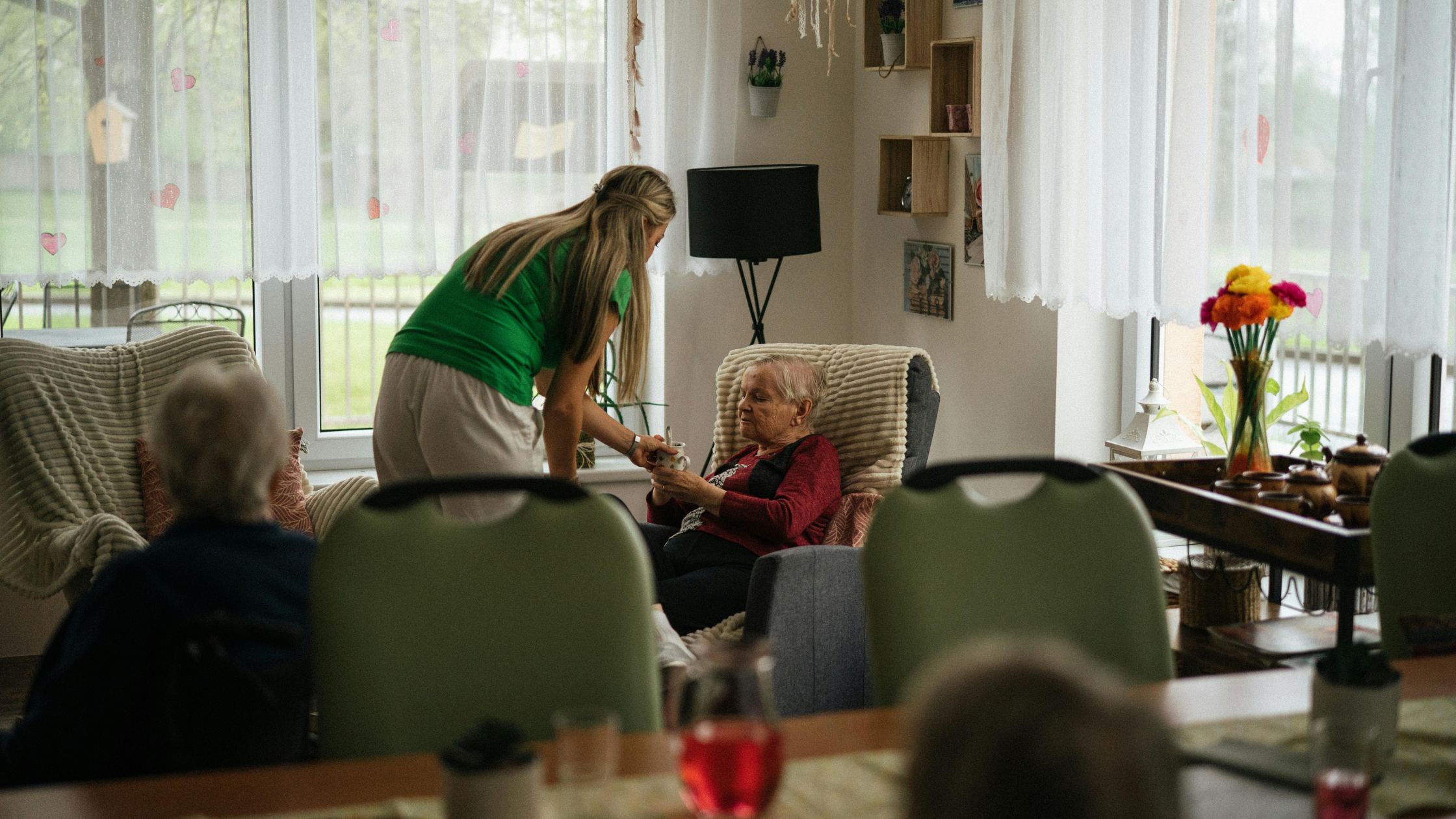
When a parent, spouse, or loved one begins having difficulty with everyday activities, families often start looking for help at home.
But one question comes up again and again:
What does a non-medical home caregiver actually do?
The answer depends on the person’s individual needs and the care plan, but non-medical caregivers generally help with everyday activities, personal routines, companionship, meals, errands, and household tasks.
Unlike skilled healthcare professionals who provide medical treatment, non-medical caregivers focus on helping people manage daily life and remain comfortable in their own homes.
For families in Avon, Plainfield, Brownsburg, Indianapolis, Carmel, Fishers, Noblesville, Nashville, and surrounding Indiana communities, understanding what a non-medical caregiver does can make it easier to decide whether home care is right for your loved one.
What Is a Non-Medical Home Caregiver?
A non-medical home caregiver provides assistance to a person in their own home without providing skilled medical treatment.
The caregiver’s role is centered around everyday living.
Depending on the care plan, a caregiver may help with:
- Companionship
- Meal preparation
- Grocery shopping
- Light housekeeping
- Bathing and personal routines
- Dressing and grooming assistance
- Everyday activities
- Household organization
- Respite support for family caregivers
- General supervision and companionship
The objective is not to take away a person’s independence.
Instead, the caregiver provides support where it is needed so the individual can continue participating in the activities they are able and comfortable to do.
What Does a Non-Medical Caregiver Do During a Typical Day?
There is no single “typical” caregiver schedule.
Every person has different needs.
One client may need a caregiver for a few hours to prepare meals and provide companionship. Another may need more regular assistance throughout the day.
A typical visit might look something like this:
Morning
A caregiver may help the client begin the day by assisting with appropriate personal routines, preparing breakfast, organizing the home, and providing companionship.
Afternoon
The caregiver might prepare lunch, assist with grocery shopping or errands, complete light housekeeping, and spend time with the client.
Evening
Depending on the schedule, a caregiver may help prepare dinner, assist with an evening routine, tidy commonly used areas, and provide companionship.
The actual responsibilities should always be based on the agreed care plan and the services the agency provides.
10 Common Things a Non-Medical Home Caregiver Can Help With
1. Companionship
Companionship is one of the most important parts of home care.
An older adult may be physically capable of living at home but spend significant amounts of time alone.
A caregiver can provide:
- Conversation
- Social interaction
- Company during meals
- Shared activities
- Reading
- Games
- Walks when appropriate
- General presence and reassurance
Sometimes having another person around is the support a family member needs most.
Home care is not only about completing tasks.
It is also about human connection.
2. Meal Preparation
Preparing meals can become challenging for older adults.
Shopping for ingredients, standing in the kitchen, preparing food, and cleaning afterward can all require considerable effort.
Depending on the care plan, a caregiver may assist with:
- Planning simple meals
- Preparing food
- Serving meals
- Cleaning up after meals
- Grocery shopping
- Maintaining a regular mealtime routine
The caregiver can help make daily meals more manageable while allowing the client to remain involved in food choices and preparation whenever possible.
3. Grocery Shopping
Grocery shopping is another everyday task that can become difficult.
A caregiver may assist with grocery shopping based on the family’s care plan.
This could include:
- Creating a grocery list with the client.
- Shopping for household and food items.
- Bringing groceries home.
- Putting items away appropriately.
For someone who no longer drives or finds shopping physically difficult, this type of support can be extremely useful.
4. Light Housekeeping
Maintaining a home can become harder with age.
Non-medical home care may include appropriate light housekeeping as part of a care plan.
Examples can include:
- Tidying living areas
- Washing dishes
- Changing linens
- Light laundry
- Cleaning commonly used areas
- Organizing everyday items
The focus is generally on maintaining a comfortable living environment rather than performing deep cleaning or specialized housekeeping.
5. Bathing Assistance
Personal care can become one of the more sensitive areas for families.
A person may have difficulty getting in and out of the shower or maintaining their normal bathing routine.
Depending on the agency’s services and the care plan, a non-medical caregiver may assist with appropriate personal care tasks such as bathing.
This type of assistance should always be handled with:
- Respect
- Privacy
- Patience
- Dignity
- Clear communication
The goal is to provide appropriate assistance while preserving as much independence as possible.
6. Dressing and Grooming
Getting dressed and maintaining grooming routines may also become challenging.
Depending on the care plan, caregivers may assist with everyday activities such as:
- Selecting clothing
- Dressing
- Grooming
- Personal hygiene routines
- Organizing clothing
- Preparing for the day
Small amounts of assistance can sometimes make a significant difference in a person’s ability to maintain their normal routine.
7. Errands and Everyday Tasks
A caregiver may also assist with certain everyday errands.
Examples can include:
- Grocery shopping
- Picking up household items
- Accompanying the client on appropriate errands
- Helping organize household needs
The exact services depend on the agency and the individual care plan.
8. Mobility Support
Some clients may need assistance moving around their home or during everyday activities.
Depending on the caregiver’s training, the client’s needs, and the agency’s policies, support may include appropriate assistance with movement around the home.
Families should always clearly discuss mobility needs with the home care agency.
If an individual requires skilled medical assessment or treatment related to mobility, a qualified healthcare professional should be involved.
9. Respite for Family Caregivers
Family members often provide a significant amount of care themselves.
A daughter may stop by after work.
A son may handle groceries.
A spouse may provide assistance throughout the day.
A relative may spend weekends helping with household tasks.
Over time, this responsibility can become exhausting.
Non-medical home care can provide respite support, allowing family caregivers to take time for:
- Work
- Rest
- Appointments
- Shopping
- Family responsibilities
- Personal time
Respite care does not replace the family.
It provides another layer of support.
10. Consistent Companionship and Routine
Consistency can be particularly valuable.
When a caregiver regularly works with the same client, they can become familiar with the person’s:
- Daily schedule
- Preferences
- Personality
- Meal preferences
- Favorite activities
- Household routines
- Communication style
This familiarity can make everyday care feel more comfortable and natural.
What a Non-Medical Caregiver Does NOT Do
Understanding the limits of non-medical home care is just as important as understanding what caregivers can do.
A non-medical caregiver is generally not a substitute for a nurse, doctor, therapist, or other licensed healthcare professional.
Depending on the provider and applicable requirements, non-medical caregivers may not provide services such as:
- Diagnosing medical conditions
- Providing medical treatment
- Performing skilled nursing procedures
- Physical therapy
- Clinical assessments
- Wound treatment
- Other skilled medical services
If your loved one needs medical care, speak with their healthcare provider or an appropriate home health professional.
Non-medical home care and healthcare services can sometimes work alongside each other, with each provider handling the responsibilities appropriate to their role.
Non-Medical Home Care vs. Home Health Care
The terms home care and home health care are sometimes used interchangeably, but they generally describe different types of support.
Non-Medical Home Care
Focuses on everyday living and may include:
- Companionship
- Meal preparation
- Grocery shopping
- Light housekeeping
- Personal care assistance
- Everyday routines
- Respite support
Home Health Care
Generally involves skilled healthcare services provided by qualified medical professionals.
Examples can include certain:
- Nursing services
- Physical therapy
- Occupational therapy
- Speech therapy
- Clinical care
The exact services available depend on the provider and the individual’s circumstances.
If you are unsure which type of service your loved one needs, start by discussing their needs with an appropriate healthcare professional and a reputable home care provider.
Who Needs a Non-Medical Home Caregiver?
A person does not have to be completely dependent on others to benefit from home care.
In fact, many people receiving non-medical home care are still able to do many things independently.
A caregiver may simply help with the activities that have become difficult.
Home care may be appropriate for someone who:
- Wants to continue living at home
- Needs help with household tasks
- Has difficulty preparing meals
- Needs grocery assistance
- Would benefit from regular companionship
- Needs help with personal routines
- Has family members who cannot always be available
- Needs respite support
- Wants flexible assistance rather than a residential move
The goal is to provide the right amount of help, rather than automatically doing everything for the person.
How a Caregiver Can Support Independence
It may seem contradictory, but receiving help can actually allow someone to remain more independent.
Consider a person who can prepare a simple breakfast but struggles with grocery shopping.
Without help, they might stop preparing meals altogether.
With a caregiver assisting with groceries, they may continue preparing their own breakfast.
Another person may be able to dress themselves but struggle with bathing.
Appropriate assistance with bathing may allow them to continue managing other parts of their daily routine independently.
Good caregiving asks:
“What can this person still do?”
rather than:
“What can we do for this person?”
That difference matters.
How Caregivers Provide Companionship
Companionship does not necessarily mean sitting in a chair and talking all day.
Caregivers can participate in everyday activities with clients.
Depending on the person’s interests and care plan, this might include:
- Talking over coffee
- Watching a favorite television program
- Reading
- Playing cards
- Looking through family photographs
- Preparing a meal together
- Taking a walk when appropriate
- Working on hobbies
- Sitting together during meals
The activity itself is often less important than having meaningful human interaction.
What Does a Caregiver Do for a Family Caregiver?
Home care can also support the family.
Imagine a daughter who works Monday through Friday but visits her mother every evening.
She may be able to continue providing emotional and family support while a professional caregiver handles several practical tasks during the week.
For example:
Professional caregiver:
- Meal preparation
- Grocery shopping
- Companionship
- Light housekeeping
- Personal assistance
Family:
- Weekend visits
- Family activities
- Appointments
- Emotional support
- Important family decisions
This division of responsibilities can make caregiving more sustainable.
How Many Hours of Home Care Does Someone Need?
There is no universal answer.
The right schedule depends on the person’s needs and family circumstances.
Someone may need:
A Few Hours Per Week
For companionship, groceries, meals, or household assistance.
Several Hours Per Day
For more consistent support with daily routines.
Daily Care
For individuals who need regular assistance throughout the week.
Overnight or Around-the-Clock Support
For families with more extensive care requirements, depending on the provider’s capabilities and the person’s circumstances.
The important thing is to start with the person’s actual needs.
How to Create a Home Care Plan
Before contacting an agency, write down what happens during a normal day.
Create three simple sections.
Morning
- Wake-up routine
- Bathing
- Dressing
- Breakfast
- Medication reminders, if applicable and permitted by the provider
- Household tasks
Afternoon
- Lunch
- Grocery shopping
- Activities
- Companionship
- Household tasks
Evening
- Dinner
- Personal routine
- Companionship
- Preparing for bed
Now mark the activities where your loved one needs help.
This gives the home care agency a clearer understanding of what support may be appropriate.
What Should Families Look for in a Caregiver?
Finding the right caregiver is about more than availability.
Families should consider:
Reliability
Will the caregiver arrive when scheduled?
Compassion
Does the caregiver treat the client with patience and respect?
Experience
Does the caregiver have appropriate caregiving experience?
Screening
Does the agency screen caregivers before placement?
Training
Does the agency provide caregiver training and ongoing education?
Personality
Will the caregiver’s personality work well with your loved one?
Communication
Does the caregiver communicate appropriately with the family and agency?
Consistency
Can the agency provide a consistent caregiver whenever possible?
The relationship between caregiver and client matters.
How Does Caregiver Matching Work?
A good caregiver match considers more than location and availability.
Think about your loved one’s personality.
For example:
A quiet client may prefer a calm caregiver who enjoys conversation but does not overwhelm them.
An outgoing client may enjoy a caregiver who is highly social and active.
A client who enjoys cooking may appreciate someone who is comfortable preparing meals with them.
A person who values a strict routine may benefit from a caregiver who is organized and consistent.
These details should be discussed with the agency during the initial consultation.
What to Tell a Home Care Agency During the First Call
You do not need to have everything figured out before contacting an agency.
Start by explaining:
- Who needs care?
- Where do they live?
- What does a normal day look like?
- What activities are becoming difficult?
- How many hours of support do you think may be needed?
- What does the family currently handle?
- What does your loved one enjoy?
- What are your biggest concerns?
- What type of schedule would work best?
- Are there any medical or safety concerns that need to be discussed with a healthcare professional?
The more information you provide, the easier it is for the agency to understand your situation.
How Non-Medical Home Care Can Help Seniors Stay at Home
For many older adults, the ability to remain at home is extremely important.
Home is where their belongings are.
It is where their memories are.
It is where their routines have developed over many years.
Non-medical home care can provide practical assistance without requiring an immediate move into a residential care setting.
A caregiver may help with the tasks that have become difficult while the individual continues enjoying the parts of home life that remain important to them.
Non-Medical Home Care in Avon and Hendricks County
Families in Avon, Plainfield, Brownsburg, and surrounding Hendricks County communities can explore non-medical home care when a loved one needs additional everyday support.
Kwate Homecare LLC is based in Avon and provides flexible, hourly non-medical home care for families throughout Hendricks County and surrounding service areas.
Depending on the care plan, support may include:
- Companionship
- Meal preparation
- Grocery shopping
- Light housekeeping
- Personal care assistance
- Everyday support
- Respite for family caregivers
The approach is centered around the individual rather than a one-size-fits-all package.
Home Care in Indianapolis and Marion County
Kwate Homecare also serves families throughout Marion County, including Indianapolis and surrounding townships.
For families balancing work, children, and caregiving responsibilities, flexible home care can provide additional support when family members cannot always be available.
The right care plan may allow relatives to remain involved without requiring them to handle every caregiving responsibility themselves.
Home Care in Hamilton County
Families in Carmel, Fishers, Noblesville, and nearby Hamilton County communities may also explore non-medical home care for loved ones who want to remain at home.
Care needs can range from companionship and errands to meal preparation, personal assistance, and household support.
The important thing is to build the plan around the individual.
Home Care in Brown County
Kwate Homecare also serves families in Brown County, including Nashville and surrounding communities.
Families considering home care should look for a provider that offers clear communication, appropriate caregiver screening, flexible scheduling, and individualized care planning.
Frequently Asked Questions About Non-Medical Home Caregivers
What does a non-medical caregiver do?
A non-medical caregiver helps with everyday activities and routines. Depending on the care plan, services may include companionship, meal preparation, grocery shopping, light housekeeping, personal care assistance, and respite support.
Can a non-medical caregiver help with bathing?
Depending on the provider and care plan, caregivers may assist with bathing and other personal care routines. Families should ask the agency exactly which personal care services are available.
Can a caregiver prepare meals?
Yes. Meal preparation may be included in a non-medical home care plan depending on the provider and the client’s needs.
Can a caregiver go grocery shopping?
Grocery shopping may be included as part of a care plan. Ask the agency how errands and transportation are handled.
Do caregivers provide companionship?
Yes. Companionship is a common component of non-medical home care and may include conversation, shared activities, and general social interaction.
Can a caregiver clean the house?
Non-medical home care may include light housekeeping related to the client’s everyday living environment. Deep cleaning or specialized cleaning may not be included.
Can a caregiver provide medication?
Non-medical caregivers generally do not replace nurses or other medical professionals. Medication-related assistance depends on the provider’s policies and applicable requirements. Families should clarify this before services begin.
Do caregivers provide nursing care?
Non-medical caregivers are not a substitute for skilled nursing. Medical or clinical needs should be handled by appropriately qualified healthcare professionals.
Can home care help family caregivers?
Yes. Home care can provide respite and additional everyday support, allowing family caregivers to take breaks and manage work and other responsibilities.
How much home care does someone need?
It depends on the individual. Some people need only a few hours per week, while others may require daily, overnight, or more extensive support.
Can home care help someone remain at home?
For some individuals, appropriate non-medical home care can provide the additional support needed to continue living at home.
Is non-medical home care right for everyone?
No. The appropriate care setting depends on the person’s needs, home environment, family support, safety considerations, and other circumstances. Medical or skilled care needs should be evaluated by appropriate healthcare professionals.
Choosing the Right Non-Medical Home Care Provider
When comparing agencies, look beyond the list of services.
Ask about:
- Licensing
- Bonding and insurance
- Caregiver screening
- Background checks
- Caregiver training
- Ongoing education
- Caregiver matching
- Backup coverage
- Scheduling flexibility
- Communication
- Pricing
- Contract requirements
- Services included
A good agency should be willing to explain how its process works before you commit to care.
Why Families Choose Kwate Homecare
Kwate Homecare LLC takes a family-first approach to non-medical home care.
Our caregivers are screened before placement and receive ongoing training in caregiving best practices.
We provide hourly, flexible care without requiring families to commit to rigid long-term packages.
Our service areas include:
- Hendricks County
- Marion County
- Hamilton County
- Brown County
The goal is straightforward:
Provide compassionate support that helps make everyday life easier while respecting the independence and dignity of the person receiving care.
When Should You Consider a Non-Medical Caregiver?
You may want to explore home care when you begin noticing that everyday activities are becoming harder for your loved one.
This might include:
- Difficulty preparing meals
- Difficulty shopping
- Trouble maintaining the home
- Increased isolation
- Difficulty with personal routines
- Family members struggling to provide enough support
- A loved one wanting to remain at home
- Increasing need for companionship
You do not have to wait for a crisis.
Starting the conversation early gives your family more time to understand the available options and determine what type of support makes sense.
The Goal Is Support, Not Taking Away Independence
One of the biggest misconceptions about home care is that accepting help means losing independence.
It doesn’t have to.
The right caregiver can help with the things a person struggles with while encouraging them to continue doing the things they can manage.
That might mean helping with groceries while the client prepares their own meals.
It might mean assisting with bathing while the client chooses their clothing and daily routine.
It might mean providing companionship while the person continues enjoying their favorite hobbies.
Good home care meets people where they are.
Talk With Kwate Homecare About Your Family’s Needs
If you’re wondering whether a non-medical home caregiver could help your loved one, the first step doesn’t have to be complicated.
Tell us what a normal day looks like.
Tell us what has become difficult.
Tell us what your loved one wants to continue doing.
From there, we can discuss the type of support that may be appropriate.
Kwate Homecare LLC provides flexible, hourly, non-medical home care for families throughout Hendricks County, Marion County, Hamilton County, and Brown County, Indiana.
Call (317) 998-5954 or request a care plan to start the conversation.
Care that feels like coming home.

developer_ksa
Sharing practical guidance and helpful resources to support families as they navigate home care and everyday wellbeing.